

Top News
Google releases an offline-first dictation app for iOS
Last week, Google dropped a new dictation app called “Google Edge AI Eloquent” (please change the name) on iOS without any announcement. The app was released after Google launched new open-source Gemma 4 models capable of running locally on an iPhone.
The AI Eloquent app largely acts as a voice note-taking app at the moment because it can’t work across apps. The company said in the app description on the App Store that a keyboard, like Wispr Flow and SuperWhisper, is coming soon. At the moment, your dictation is copied to the clipboard by default, and you can paste it into any app.
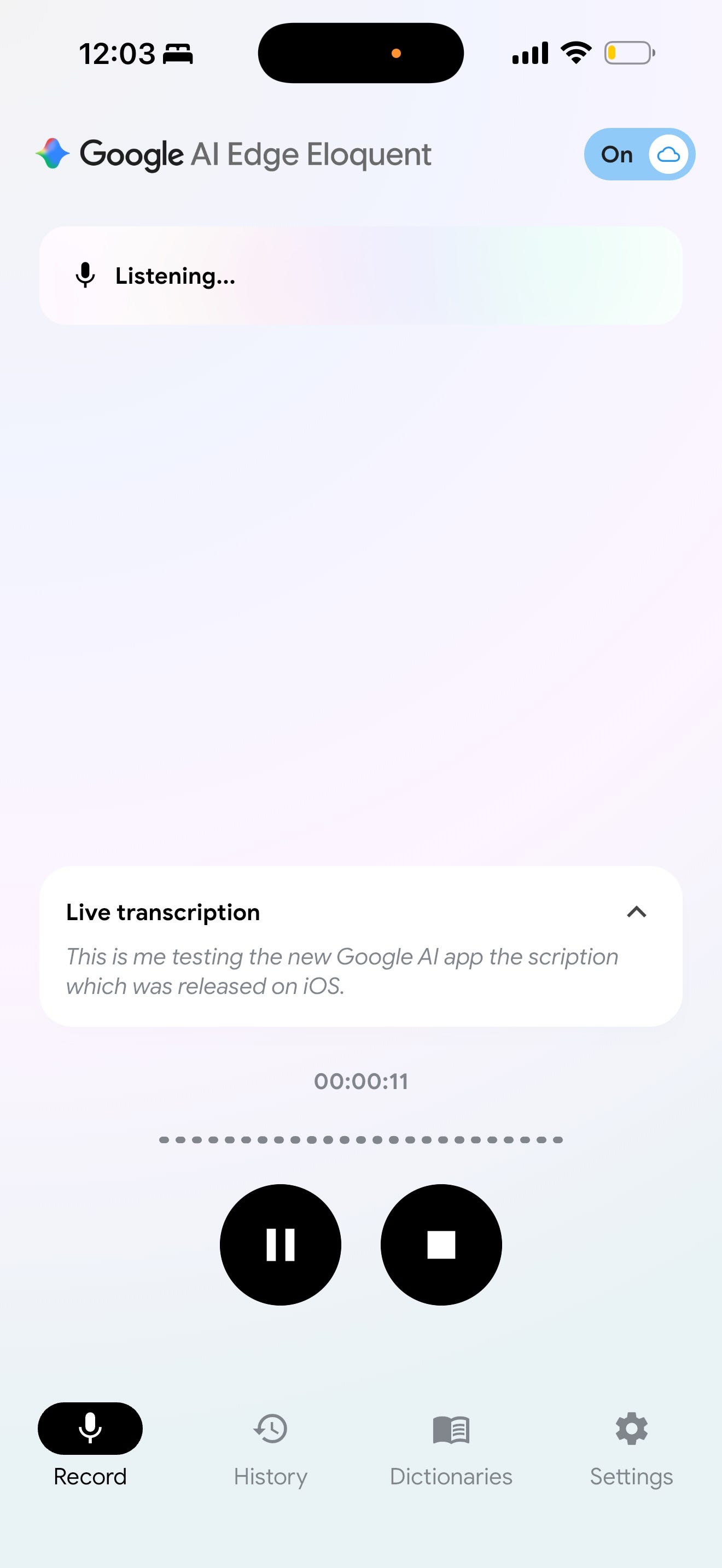
The app is experimental, and it’s in its early days. Plenty of times when I tried to use it for voice note-taking, it misunderstood some of the words, and later cut them out in edits because AI thought they were redundant filler words. For instance, while describing a voice pin like Plaud, I said, “You can also attach it to your bag,” and AI transcribed it as “back” and completely removed that part of the sentence in editing.
If you don’t mind these errors while testing, you can edit the text after AI applies its edits. You can also downvote the generation if you are not happy with it.
On the day the app was released, there was a brief time when the app description said that the app would also be available on Android with tighter system integration. On Android, it would be in the form of a keyboard and a floating bubble. As I wrote last week, the iOS 26.4 update from Apple is breaking dictation apps. With so few options available on Android, a Google keyboard could be a great option for users. Plus, this will also help more people know about the AI-powered dictation.
Model Behaviour
ByteDance launches a new speech LLM named Seeduplex
ByteDance launched a new speech-based LLM that can listen and speak simultaneously. The company said that with this model, it reduced endpoint latency by approximately 250ms (human response time is typically around 200ms). This means there is less awkward silence or pause when you stop speaking. Due to this, the model reduces AI interruption by 40% in complex conversations.
One impressive demo showed that when a user is talking to the model, and someone else talks to them during that conversation, the model ignores that input.
Aqua Voice has a new speech recognition model
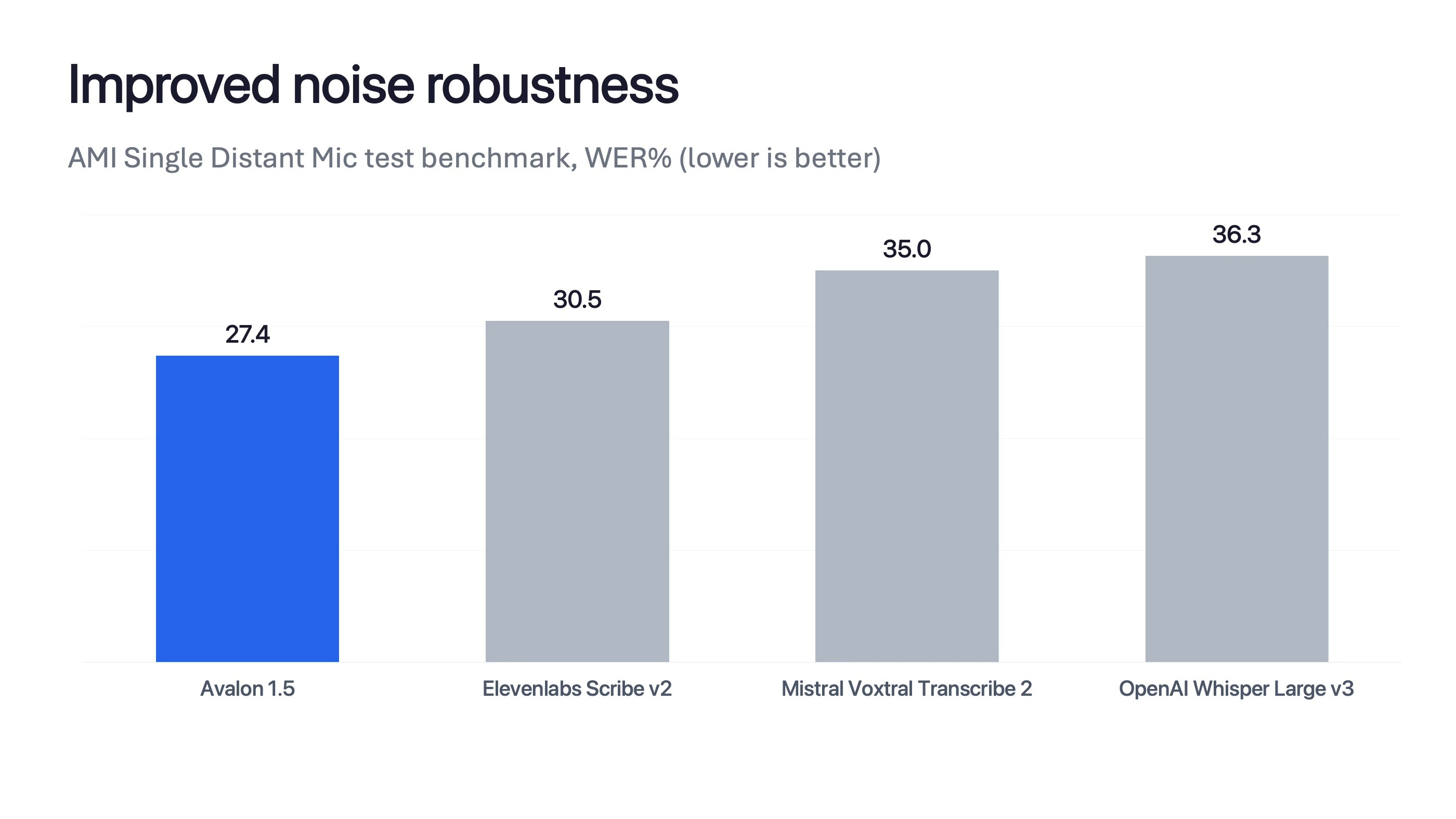
AI voice company Aqua Voice released a new automatic speech recognition (ASR) model that powers its iOS app. The company said that the model scored 5.55 average Word Error Rate (WER) on the OpenASR leaderboard. The previous Avalon 1 model had a WER score of 6.24.
Since this model is used for Aqua’s new iOS app, the company said it is working on improving microphone performance. It noted that the model scored a WER of 27.4 on the AMI Distant-Mic dataset, which consists of datasets of real-world office speech with noise.
Quick Bytes
Music labels like Universal Music Group and Sony Music Entertainment are at loggerheads with the AI music creation company Suno. Financial Times reported that both sides can’t agree on whether users should be able to share AI-generated songs outside the app
Google debuted a new feature that lets you create an avatar that looks and sounds like you, which could be used to make eight-second-long AI videos using prompts
Social network X has brought back the voice notes feature for its X Chat messaging service
Researchers at Binghamton University have claimed to develop a guiding robotic dog that can talk to users using voice commands, helping visually impaired users navigate
Aqua Voice launched its keyboard on iOS, which is powered by its new Avalon voice input model
According to WABetaInfo, WhatsApp is rolling out a new noise cancellation option for voice and video calling
Google enables longer track creation in Gemini for free users through its Lyria 3 music model
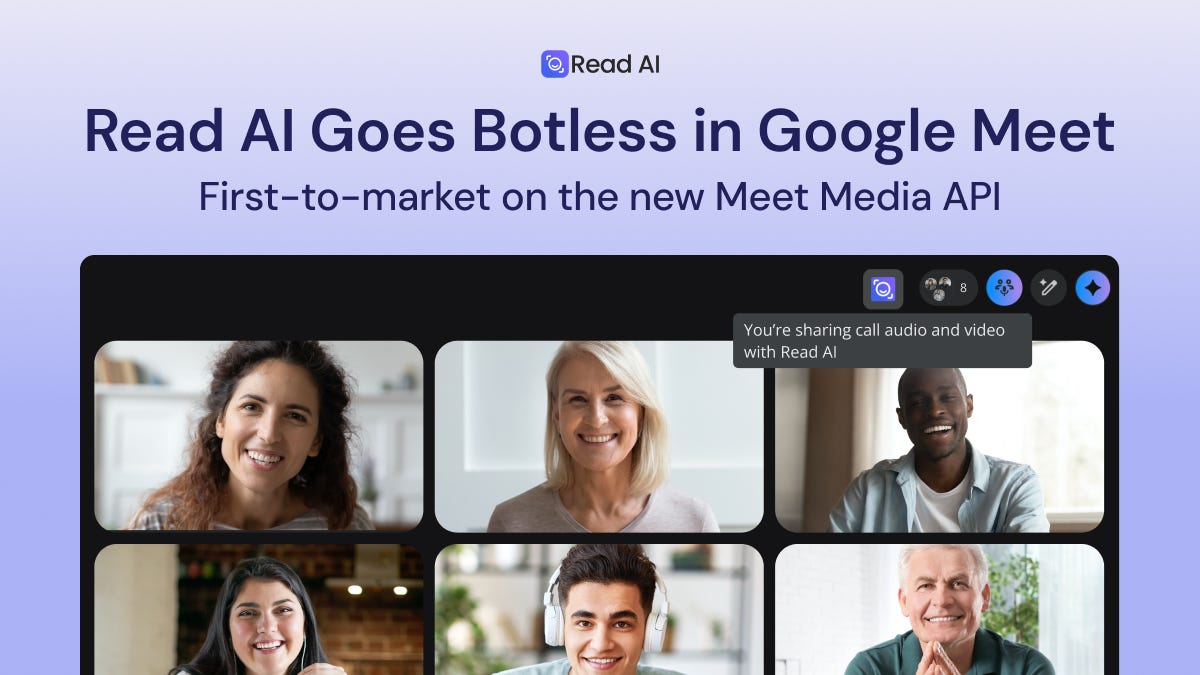
Some people don’t like bots being present in the meetings. Read AI is now using Google’s Meet Media API, which allows third-party apps to record a meeting without a visible bot. Instead, you’ll see the Read AI icon on top of the meeting
Signals & Experiments
Replying to emails using voice is a growing trend now. I have used all the transcription apps that I have tested to reply to emails using voice. But this week, I tried out a new app that I can use to get through my inbox. In the past, when I tried such apps, the voice interaction felt flat, and because of terrible turn and interruption handling, I eventually stopped using these apps very quickly.
Last week, I came across Y Combinator partner Tom Blomfield’s voicemail app. The idea is that you use this app to go through your email while you’re in your car. The assistant reads out the email to you.
Two useful actions that you can take are to archive emails or unsubscribe from marketing emails. While I don’t drive a car, I usually have access to the screens, and I usually read my email. But when I tried voice mail, I had fun going through some of them without actually having to look at the screen. Blomfield noted that the app is still a work in progress, and he is working to get official Google approval.

Blomfield told me over email that while this is a side project, he will offer a free and a premium version of it down the road.
Voice as a modality for email has been one way. Either an assistant reads out your daily agenda with the top email for you, or you initiate a reply with voice. A continuous conversation about your day possibly makes it an interesting modality.
Thank you for tuning in. Keep listening.
Email: voiceaiweek@gmail.com or im@ivanmehta.com
This newsletter is by Ivan Mehta, a consumer tech reporter at TechCrunch. For more than a year, I have covered different aspects of voice AI. This newsletter is an experimental attempt at covering what is happening in this industry, which is growing at a rapid pace.