

I am Ivan Mehta, a consumer tech reporter at TechCrunch. For more than a year, I have covered different aspects of voice AI. From voice generating to voice dictation and assistants, I have seen multimillion-dollar funding rounds to new app launches, and startups concentrating on making voice a primary interface for interaction with users.
This newsletter is an experimental attempt at covering what is happening in this industry, which is growing at a rapid pace. While the title says “voice,” I consider all kinds of AI x Audio as a valid scope for the newsletter.
Thanks for reading A week in voice AI! Subscribe for free to receive new posts and support my work.
I don’t yet have a set format for this. So bear with me as I play around and find out what resonates the best.
I typically cover news from the week, but because of holidays, there weren’t many developments.
I’m looking at you, CES
2025 was a pivotal year for voice AI, with so much money going into startups and new product launches. There was emergance of new and notable startups working with voice AI. In 2026, we are going to start the world with the Consumer Electronics Show (CES) in Las Vegas, where we see voice AI on display and how it might reach consumers in the form of gadgets.
If last year’s launch of Sandbar and Pebble ring was any indication, we will see more rings at CES trying to capture your voice. I don’t think living will be the only form factor that we see in CES. There will be bands, earbuds, pucks, pendants, and many more form factors that will try to capture your conversation and provide context later. There is no clear winner yet in the category when it comes to the form factor, and we might just see multiple voice AI notetakers with different shapes and sizes exist in the market.
Earbuds are an interesting silo. We already use them in our everyday life, but will it be better with/for AI? You can chat with Siri or Gemini using earbuds, but there isn’t a huge recall for that. In the past year, there were new earbuds dedicated to speaking with AI and the assistant providing you with context all the time. But you might not want all the answers in voice, and if the earbuds just concentrate on that, only a few people might be interested in that gadget. On the other hand, companies like Timekettle have focused on having built-in translation within the earbuds. Though they might have competition in AirPods allowing live translation. There are companies that also solely focus on meeting recording through earbuds. But to scale, they have to take on a ton of digital and physical tools already available for meeting note-taking
Subtle, a noise isolation model company, announced its earbuds ahead of CES. These buds help you sound better, and with Subtle’s app, you can chat with AI and take voice notes. Plus, you can use the buds for dictation in any of the apps on your iPhone or Mac. Essentially, Subtle’s bid is to replace your voice AI stack of apps with one. The challenge for earbud makers is to have users ditch AirPods, Samsung Buds, or any other popular audio company’s device and adopt theirs because of the perceived promise of AI.
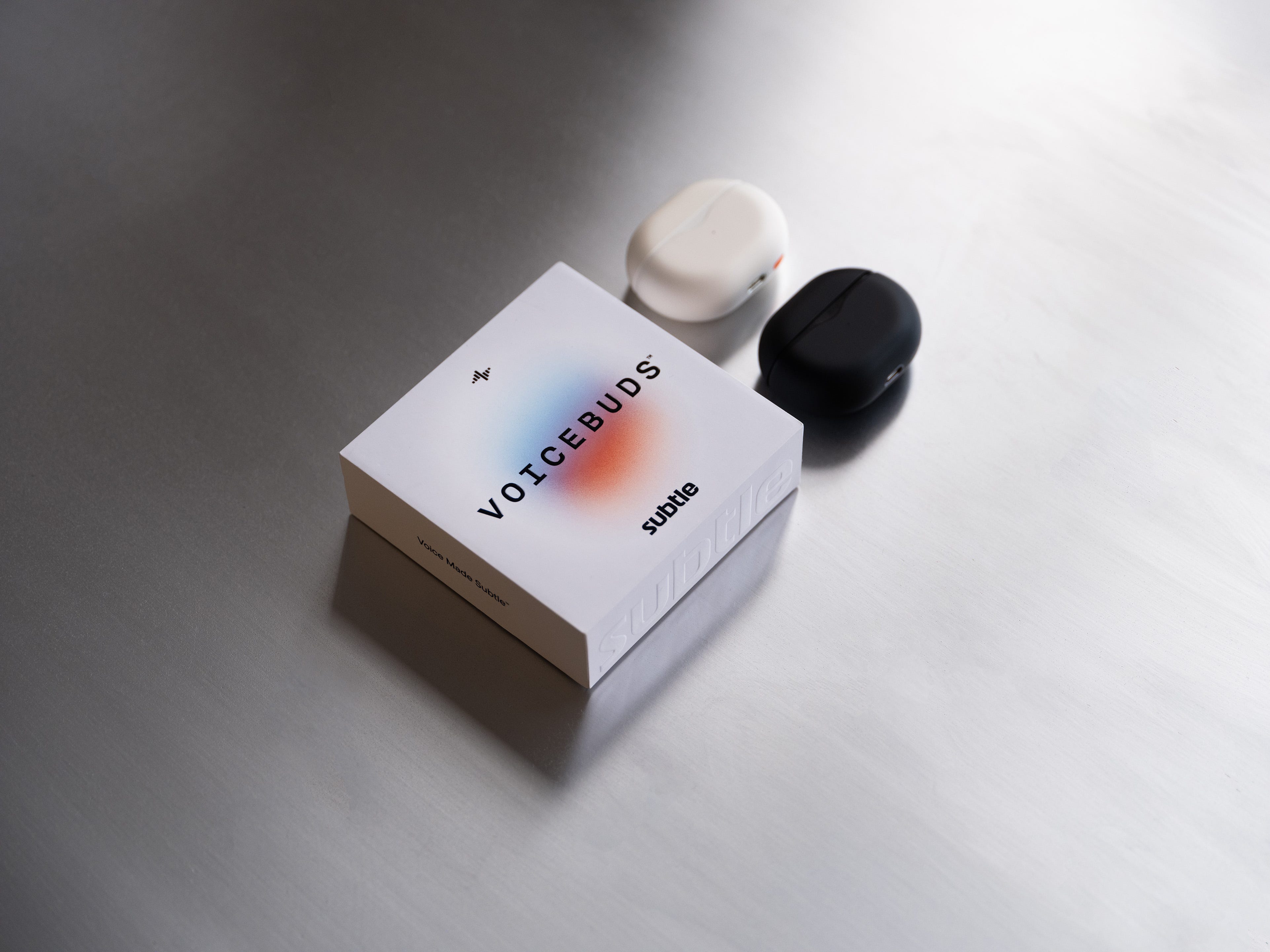
CES will also host gadgets that will have cameras besides mics to capture more context of what you see in the real world. Companies will try to capture the visual context of a speaker in the meeting or the work that you are doing while speaking to your colleagues. There is no telling if this will be effective beyond certain restricted industries, as anything with a constantly recording camera would raise privacy concerns.
We will see a move towards isolating different sounds. Subtle’s earbuds are one example, but another example is LG’s Karaoke speaker that uses AI to remove vocal from songs.
Using Monolouge’s Monokey
In the last tweleve months, AI-powered dication apps have gotten popular with new ones launching every few weeks. All of them have varying levels of accuracy and features. In the month of December, I got to try Monolouge, which is part of Every’s subscription.
While I was chatting with the app’s maker, Naveen Naidu, he offered me to send a Monokey — a single key keyboard that you press to activate Monolouge’s dictation. I’ve been using this Monokey for a while now and it has made dictation really fun.
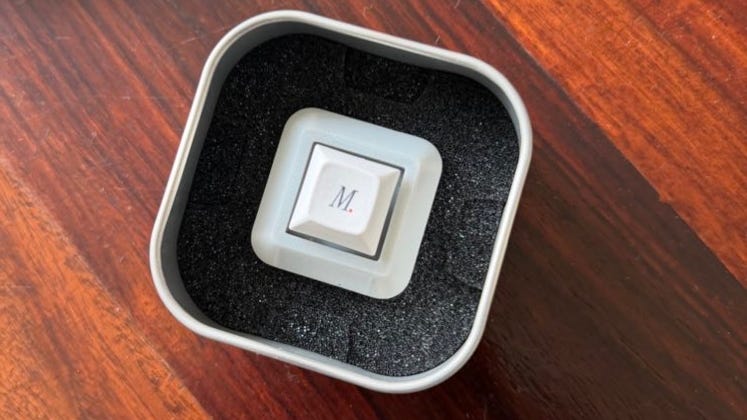
There is no material impact on the fucntionality of the dictation app. But a clickly keyboard key is a good figet toy apart from being an activating button. Pressing a key that is not a part of your MacBook for an action is also fun. Plus, with new age voice AI devices press to note or dictate could become a norm.
When I ask Naveen, if he plans to sell this Monokey anytime in the future, he said there are no such plans at the moment. Though, this key can becoming an incentivized prize or purchase for folks who cross the limit of certain words dictated via the Monolouge app.
Voice AI in enterprise is rising but that could impact some support centers
In an outlook for 2026, Oliva Moore, a parter for AI apps at a16z, said that she is bullish on voice AI. While there is rise in use of voice AI in enterprise areas such as finance, healthcare, and recruiting. One of the biggest use case for voice AI has been customer support, which can impact call center businesses.
“When it comes to BPOs and call centers, I think some of them are going to see a softer transistion and others are going to maybe see a harder cliff when it comes to the threat from AI and specifically voice AI,” Moore said.
One side effect of voice AI in customer support is that call centers might start selling a bundle where humans are still available to solve some specific problems, but voice AI would gradually handle a bulk of calls. Countries like India have already seen impact of this with voice-based jobs shrinking. Meanwhile, in Philipines, estimates suggest that in coming years, thousands of jobns ight be impacted.
Thank you for tuning in. Keep listening.
Email: at voiceaiweek@gmail.com or im@ivanmehta.com