

Top News
All voice roads lead to customer service
A lot happened in the past few days:
Bret Taylor’s Sierra raised a massive round of $925 million.
Customer service company Netomi raised $110 million.
OpenAI released new models for real-time conversation and translation.
ElevenLabs went past $500 million in ARR and announced that venture arms of enterprises like Salesforce, NVIDIA, and Deutsche Telekom had become its investors
Airbnb said 40% of its customer support queries were handled by AI
Bajaj Finance said that 30% of its outbound calls in the last financial year were handled by voice agents
We have seen multimillion-dollar fundings, new enterprise partnerships, and companies claiming that AI is handling more of their customer queries. All of these points point in one direction: customer service is voice’s biggest sector. Calling is an old channel, and companies are racing to digitize it. Sierra’s announcement captures it well.
“We’re in the very early stages of AI adoption. Agents have enabled us to digitize the last remaining analog channel: the telephone. All of us can now get things done without waiting on hold, in any language, and at any time of day (good riddance, IVR systems).”
Even in ElevenLabs’ new post about welcoming enterprises and celebrities as investors, the focus was on building and deploying voice agents.
Voice companies and investors are in sync that while there are parts of the technology, like transcription and dictation, useful to consumers, the real money is in reducing call center costs and increasing sales inflow for enterprises. At the same time, for small businesses with less than a 5-person support team, customer service companies can create AI tools that can do some preliminary conversations without human intervention.

While AI voice agents aren't necessarily cheaper than human labor yet, they offer unparalleled scalability, 24/7 availability, and the ability to maintain consistent context across thousands of simultaneous calls.
For a few years, we are bound to see companies boasting about how their systems are handling more customer queries without human intervention. However, there are multiple surveys indicating people want to talk to human agents.
The tech industry is not thinking about adding more humans despite what people say in these surveys. It is striving to make voice AI agents “more human,” by improving voice generation, cleaning audio, or passing more context.
There is a human cost to this. Support jobs are being impacted as AI is taking up some of the work. Gartner predicted that this staff cut will be messy as companies slashing support jobs will need to rehire people in 2027 under different job titles. This adds a lot of uncertainty among workers as they might not want to stick to the same industry after being laid off.
At the moment, there is no stopping this AI CX momentum as investors are pumping money into this sector. As per analytics company Tracxn, customer support startups have raised more than $2.47 billion in funding this year.
Signals & Experiments
I have been testing the new reMarkable Paper Pure tablet for the last 10 days. The tablet has a monochrome screen, a stylus that feels like writing with a pen on paper, and an on-screen keyboard. This is a great device for notetaking or even getting long drafts of blogs started with no distraction.
While the writing is great, I wondered if having voice-based notetaking would make the device better. Putting a mic into the stylus might drain the battery and make it a more complex design. It might be weird to put a mic in the tablet itself because who holds a tablet near their face to take notes?

The best bet would be software integrations that would allow me to integrate my voice or notes apps to reMarkable’s system to import notes, and that might be happening soon.
During my briefing, Paper Pure, the company, had said it would look into importing meeting transcripts or notes to the tablet.
“We know that now you know Gemini, Copilot, and there are many things, sort of generating voice transcripts and then being able to put it in the context of whatever you’re sketching or whatever you’re doing is super important.
Quick Bytes
Netflix is testing a new voice AI feature, as reported by Janko Roettgers of Lowpass Newsletter. The company is letting users press the Netflix button on their remote and search for movies and shows with phrases like “I need a good cry,” “watch in the background,” and “help me stay awake
Spotify added a new GitHub-based tool that lets users create podcasts from coding tools like Codex and Claude Code and import them to their library. There are tons of ways to now create AI-powered podcasts. With this move, Spotify wants to make sure it is the choice platform for users to listen to any kind of audio.
Agent building platform Voagent was acquired by customer service platform Aircall. We might see more consolidation moves in the customer service and support industry in the coming months.
Music AI had an interesting week. On the one hand, Suno is aiming for a $5 billion valuation for its latest funding round, as reported by Axios. On the other hand, rival Udio admitted that it scraped YouTube to train AI models in a case with Sony Music. While these music services are growing, copyright cases could be a big roadblock.
Data provider Appen said that it is teaming up with Hugging Face to provide datasets for the Open ASR leaderboard. These datasets will include data to gauge word error rate (WER) across different situations, including evaluating speech recognition for average U.S. vs. non-U.S. accents. Audio benchmarks are fragmented, and it is hard to have a view on which model is superior, with a few benchmarks that can cover only a few situations. This is a welcome step for independent and varied voice testing
Voice-based scams are getting more commonplace as miscreants are using deepfaked voices of relatives of their target or public figures. Though security experts often advise that “don’t pick up unknown numbers,” it doesn’t work in real life, as you might be expecting a call from a person or service whose number you don’t have in your address book
Besides adding new institutional investors, ElevenLabs also closed a $100 million tender offer, months after it floated one for employees in September 2025. The company also added artists like Eva Longoria and Jamie Foxx to its investor list. For the voice AI company, this could be a play to secure IP and make Hollywood connections to integrate deeper into the creative community
Off Topic
I always look for apps to store links or articles, especially since Mozilla decided to shut down Pocket (RIP).
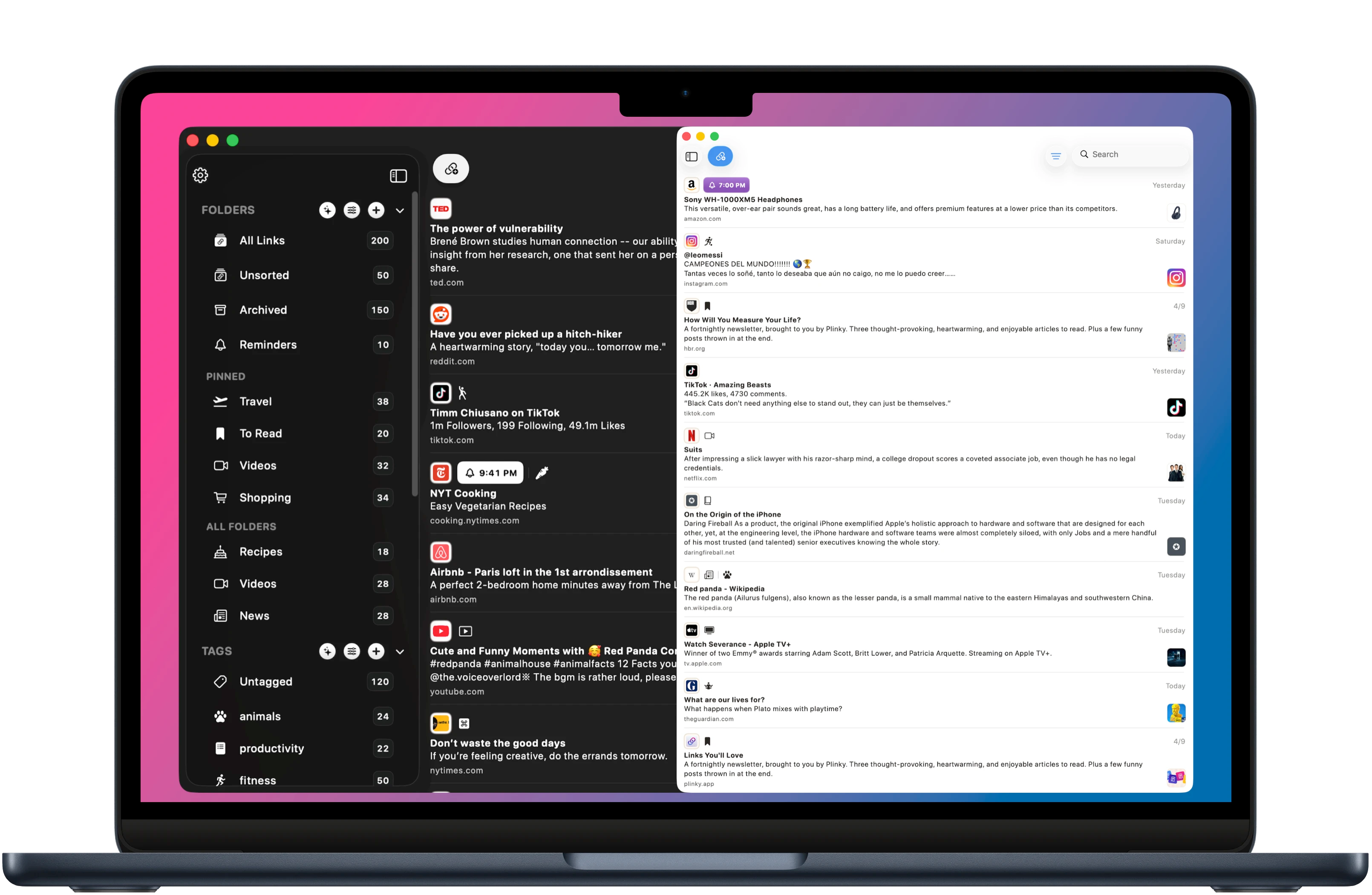
One app that I have tried out and written about in the past is former Twitter engineer Joe Fabisevich’s app Plinky. It is great, but limited to the Apple ecosystem, to save links beyond articles and categorize them. Fabisevich recently launched a Mac app in beta to make it easier to save links from the desktop.
Another option for cross-platform saving is Folio, which is made by the former head of product for Pocket, Nick Chapman. The app is available on iOS and Android as a native app, and there is also a web app and a Chrome extension for desktop use. Overall, a very clean app.
Partner Spotlight with Atomik Growth
In a chat with a16z, ElevenLabs CEO Mati Staniszewski talks about how he and his co-founder, Piotr Dabkowski, got inspired to solve for badly dubbed movies and created a company that thinks that voice is the new interface for human-computer interaction.
Sponsored content
Thank you for tuning in. Keep listening.
Email: voiceaiweek@gmail.com or im@ivanmehta.com
This newsletter is by Ivan Mehta, a freelance tech reporter at TechCrunch. This newsletter is an attempt at covering what is happening in the industry of voice, audio, and music.