

Top News
More AI music is being generated, but there are fewer listeners
In the last few years, tools like Suno and Udio have made it very easy for users to create tracks. As a result, music streaming services are seeing an influx of AI-generated music being uploaded every day. Most of them don’t have a clear policy to mark these tracks.
Deezer, however, has made efforts to create tools around identifying fully AI-generated tracks and even weeding out fraudulent tracks. The company released new numbers around AI-generated tracks, and it suggests there is no slowing down. The streaming platform said that 75,000 tracks uploaded on the platform are AI-generated. It noted that this represented roughly 44% of the AI-generated tracks.
In January 2025, Deezer said that 10% of tracks uploaded to the platform were AI-generated. In just over a year, that number has jumped to 44%.
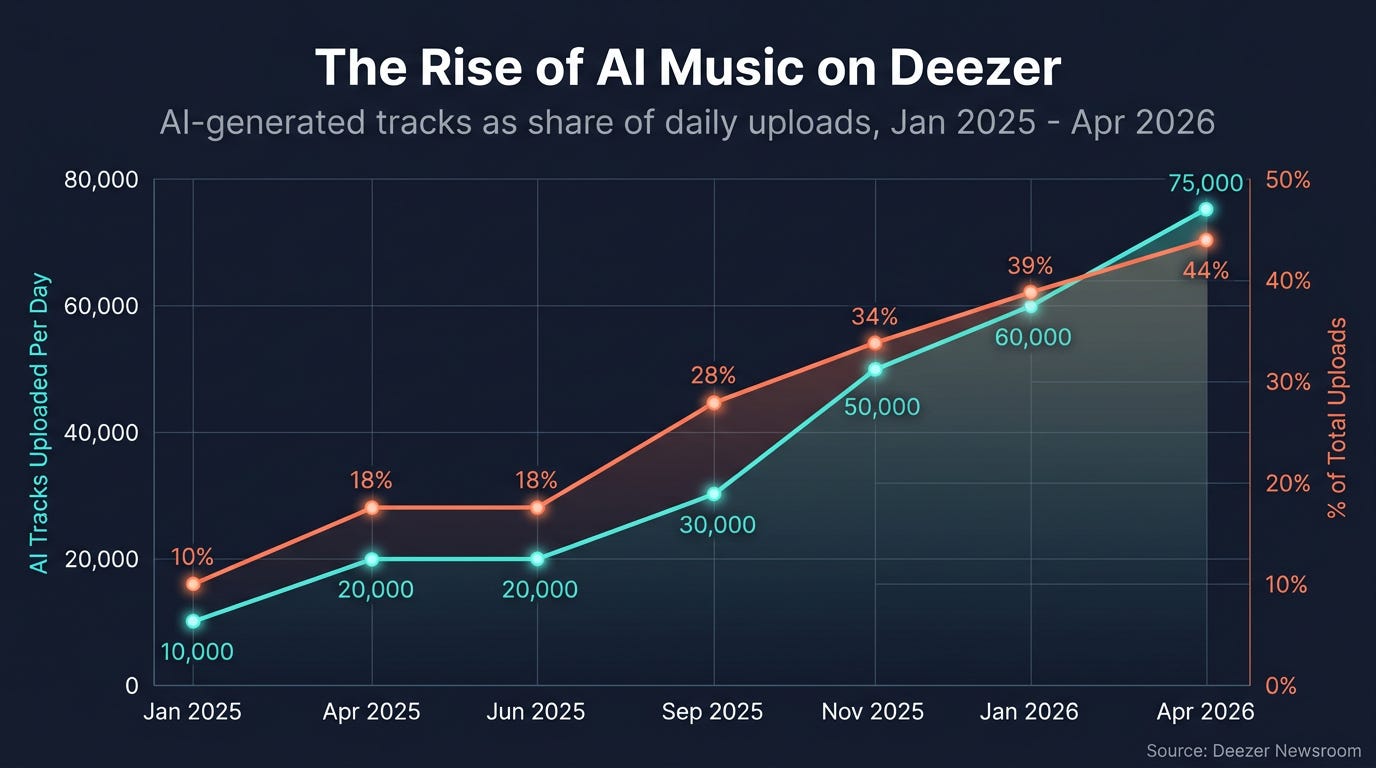
This is only what Deezer’s AI tool has caught onto. By our calculation, the total number of tracks uploaded to the platform has risen from 100,000 per day in January 2025 to around 170,000 per day in April 2026. There could be other heavily AI-aided tracks even if they are not AI-generated.
The rise in AI music is thanks to the rise in AI tooling for the vertical. This week, Suno rose to the #1 spot in the music category in the U.S. According to app analytics company Appfigures, the app has been downloaded over 2.3 million times in the country this year.
Deezer said that while a whole host of music is being uploaded to the platform, only 1-3% of total listens are of AI music. It noted that the purpose of AI tracks is to gain revenue by manufacturing streams. The company noted that up to 85% of the streams generated by fully AI-generated tracks were, in fact, fraudulent in 2025.
A recent study pegged the AI-generated music market to be worth $17.28 billion and would cause artists a revenue loss of over $4.32 billion.
Only a few streaming services are taking a stance against this: Bandcamp has banned AI music, and Deezer is removing these tracks. Platforms like Apple Music and Spotify have made it voluntary to declare if AI was used to create music. We might see more pushback from artists against AI music if money dries up.
Dictation station: new updates from Wispr Flow, Superwhisper, and Nothing
AI-powered transcription apps are finding more users, so there is a race to improve the user interface. Plus, these apps are also trying to use existing phone hardware keys to let users take quick notes.
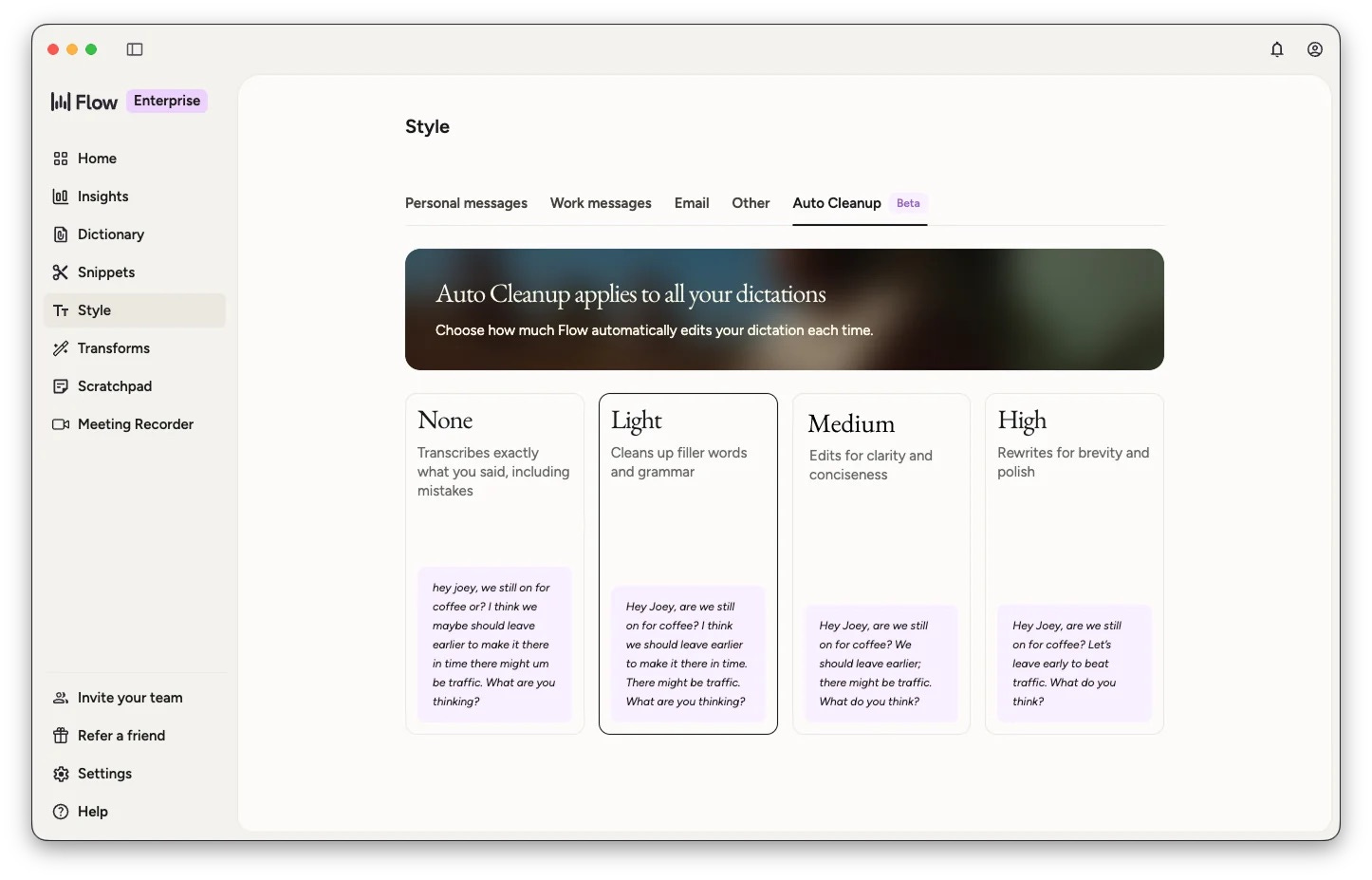
Wispr Flow released a new insights section for its desktop app. But more importantly, users can now select the level of formatting for transcription from off, light, medium, and high.
The company said that on Android, the Wispr Flow bubble shrinks after five seconds of inactivity, taking up less screen space. Plus, you can also adjust the opacity of the bubble.
This week, hardware company Nothing released a transcription tool called Essential Voice, which supports over 100 languages. Users can be activated through the Essential key or the default keyboard.


There is now a trend of using a hardware key for transcription. Superwhisper released a shortcut that lets you use the iPhone’s action key to activate transcription when the app’s keyboard is open. But if the keyboard is not active, you can use it to take voice notes.

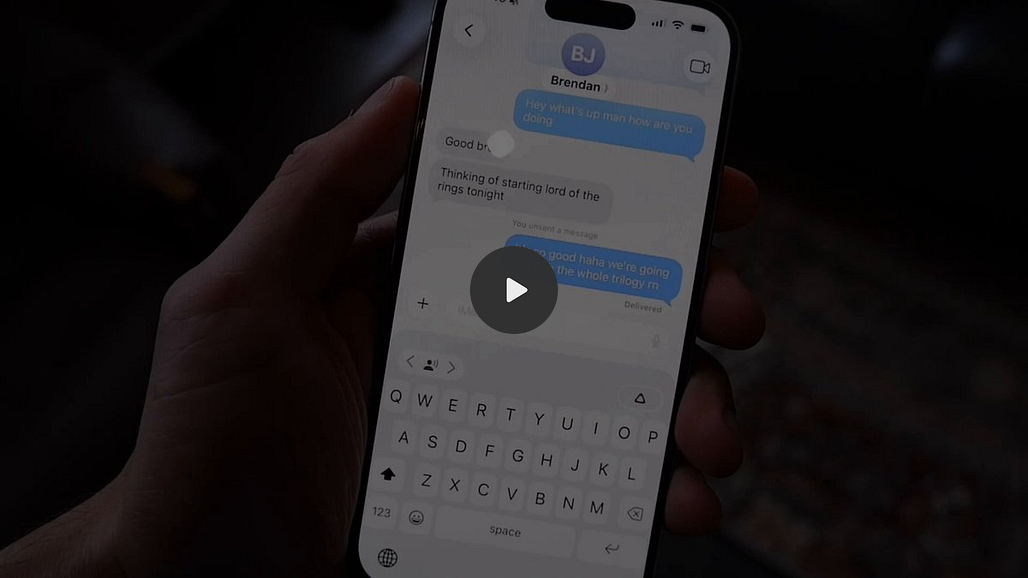
Notably, Wispr Flow also launched a similar feature. We might see more of the “press button to transcribe” features in smartphones in the future.
Signals & Experments
Do you talk to your email? If not, a lot of apps are trying to add features that let you talk to your email. Last week in the newsletter, I covered Y Combinator partner Tom Blomfield’s voicemail app that lets you go through your email through a voice assistant.
Another app that has been doing the rounds is an app called Avec, which is a Tinder-styled Gmail client. The app lets you mark it as done or tackle it later by swiping right or left. The cool thing is that it also has a big button that lets you answer or reply to emails using your voice. The app is using its own transcription engine because it feels that it can provide more personalization and control with its own tech stack.
What’s more, last week, the email app Superhuman also launched a voice reply feature for its users. The company’s CEO, Rahul Vohra, said that, unlike other apps that provide AI-powered transcription, you can also give assistance to the app to write a certain kind of email on your behalf with your voice and your writing style.


I’ve used multiple email clients, and I’ve largely not liked their style of AI writing. At best, I use AI suggestions for a short reply to possibly agree on a meeting time or confirm a detail. If I want to write a longer reply, I usually rely more on voice transcription rather than using AI-powered writing.
With this trend, we could see more and more email apps adopting voice as a reply modality and built-in transcription.
Quick Bytes
Epic Games is now partnering with Google and ElevenLabs to let developers create voice-powered NPCs in games. Last year, the Screen Actors’ Guild filed a lawsuit against an Epic subsidiary over unfair labor practices.
Japan is mulling rules to protect celebrity voices against unauthorized AI use. The Japan Times report noted that these voices have been used for sexualized content or for song covers. Actors like Matthew McConaughey have protected their voices under trademark laws.
A developer is making a local-first transcription app called Steno with Parakeet models, with a very neat interface.


Truecaller conducted a survey in the U.S., where 53% of the people who have been scammed said that they received a deepfake call. This highlights the rising number of AI calls.
Partner Spotlight with Atomik Growth
In a chat with a16z, ElevenLabs CEO Mati Staniszewski talks about how he and his co-founder, Piotr Dabkowski, got inspired to solve for badly dubbed movies and created a company that thinks that voice is the new interface for human-computer interaction.
Sponsored content
Thank you for tuning in. Keep listening.
Email: voiceaiweek@gmail.com or im@ivanmehta.com
This newsletter is by Ivan Mehta, a consumer tech reporter at TechCrunch. This newsletter is an attempt at covering what is happening in the industry of voice, audio, and music.